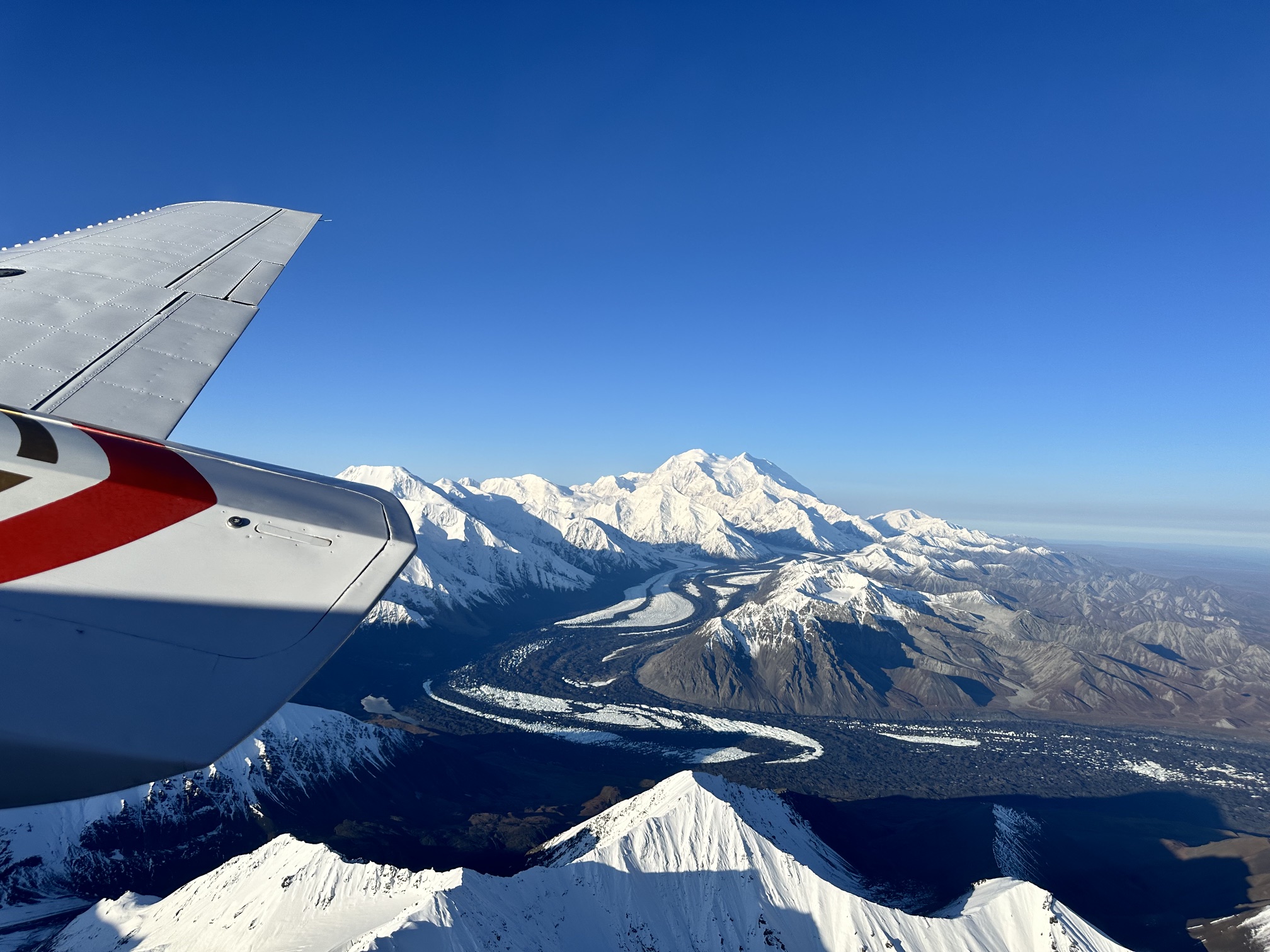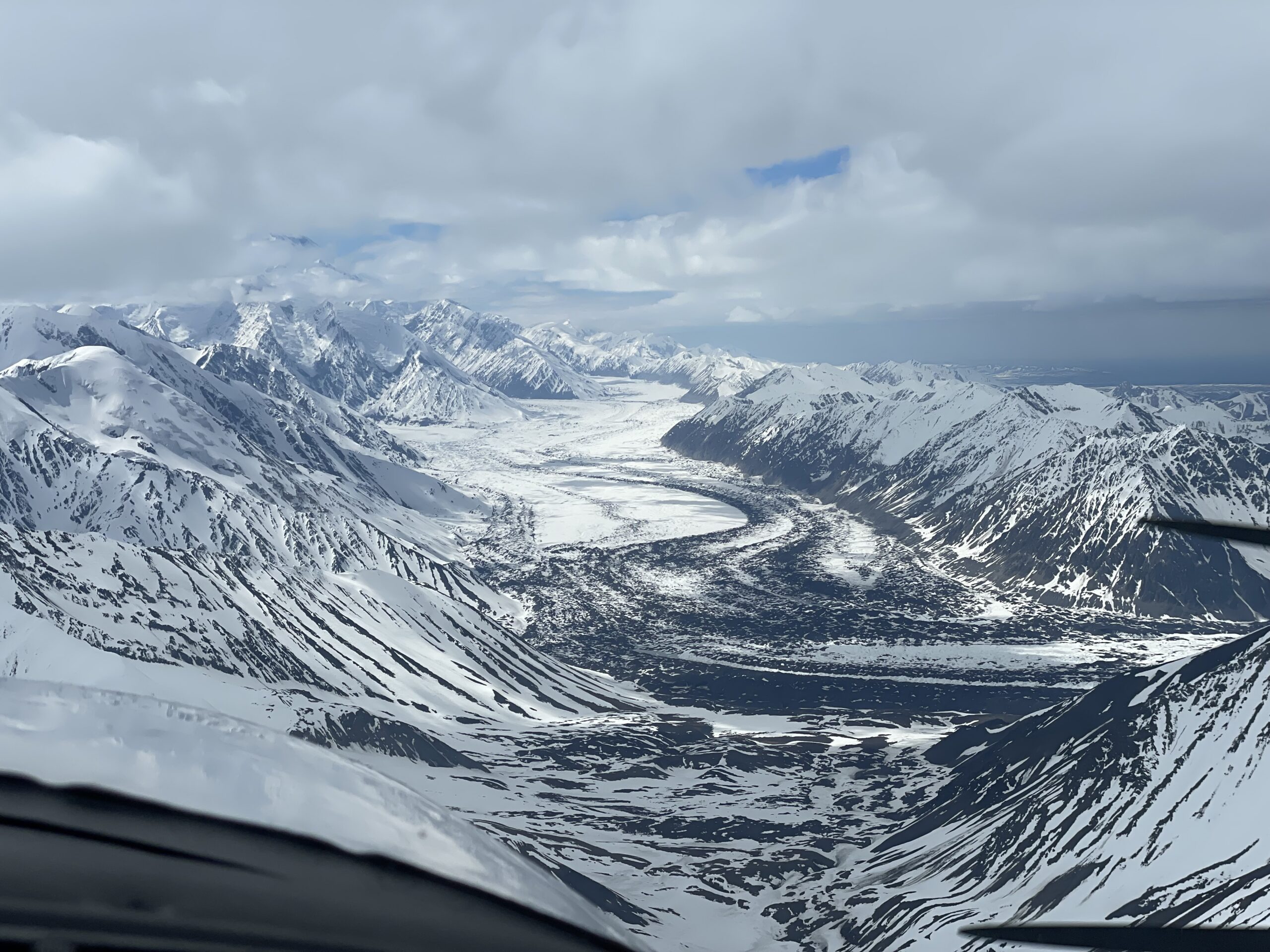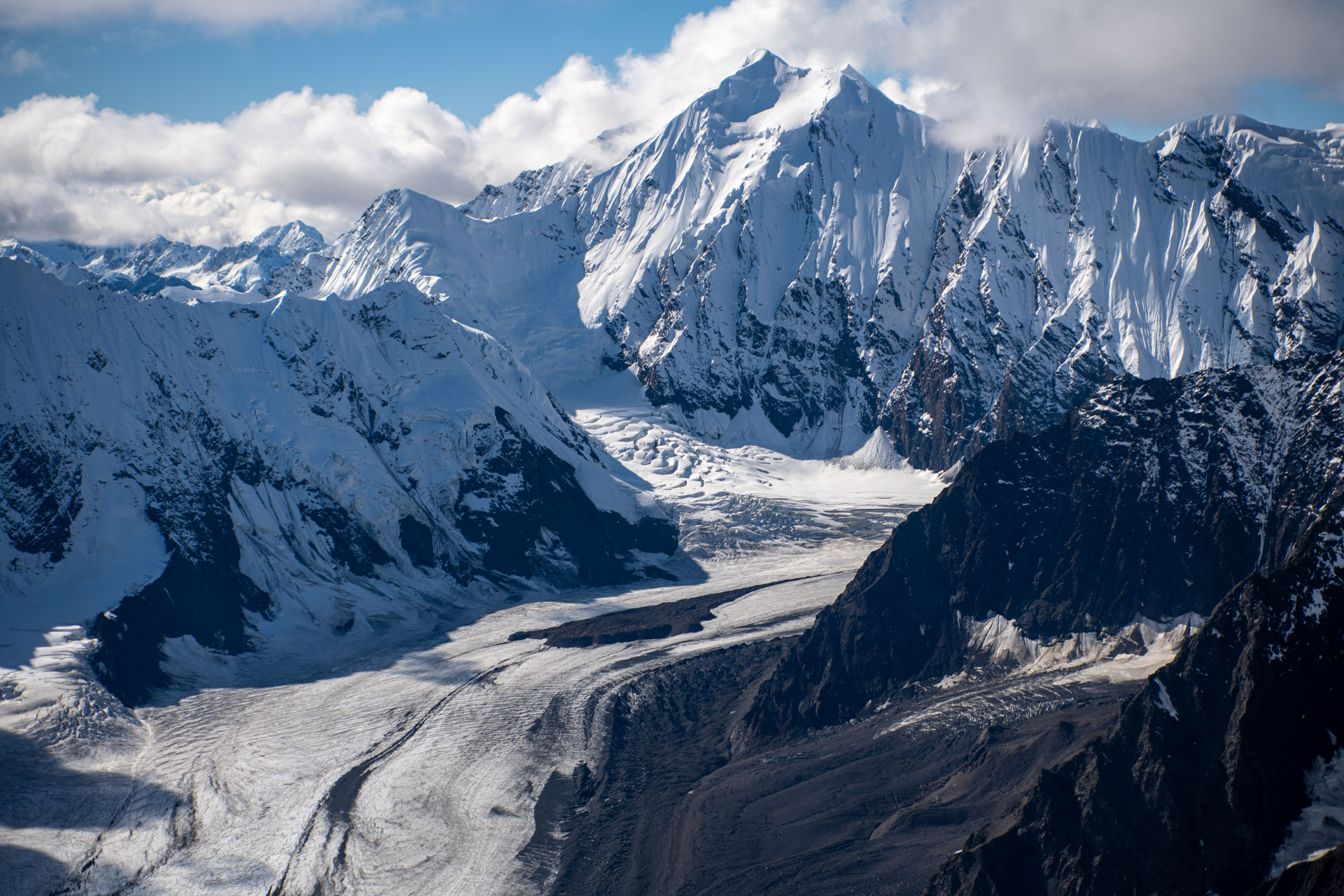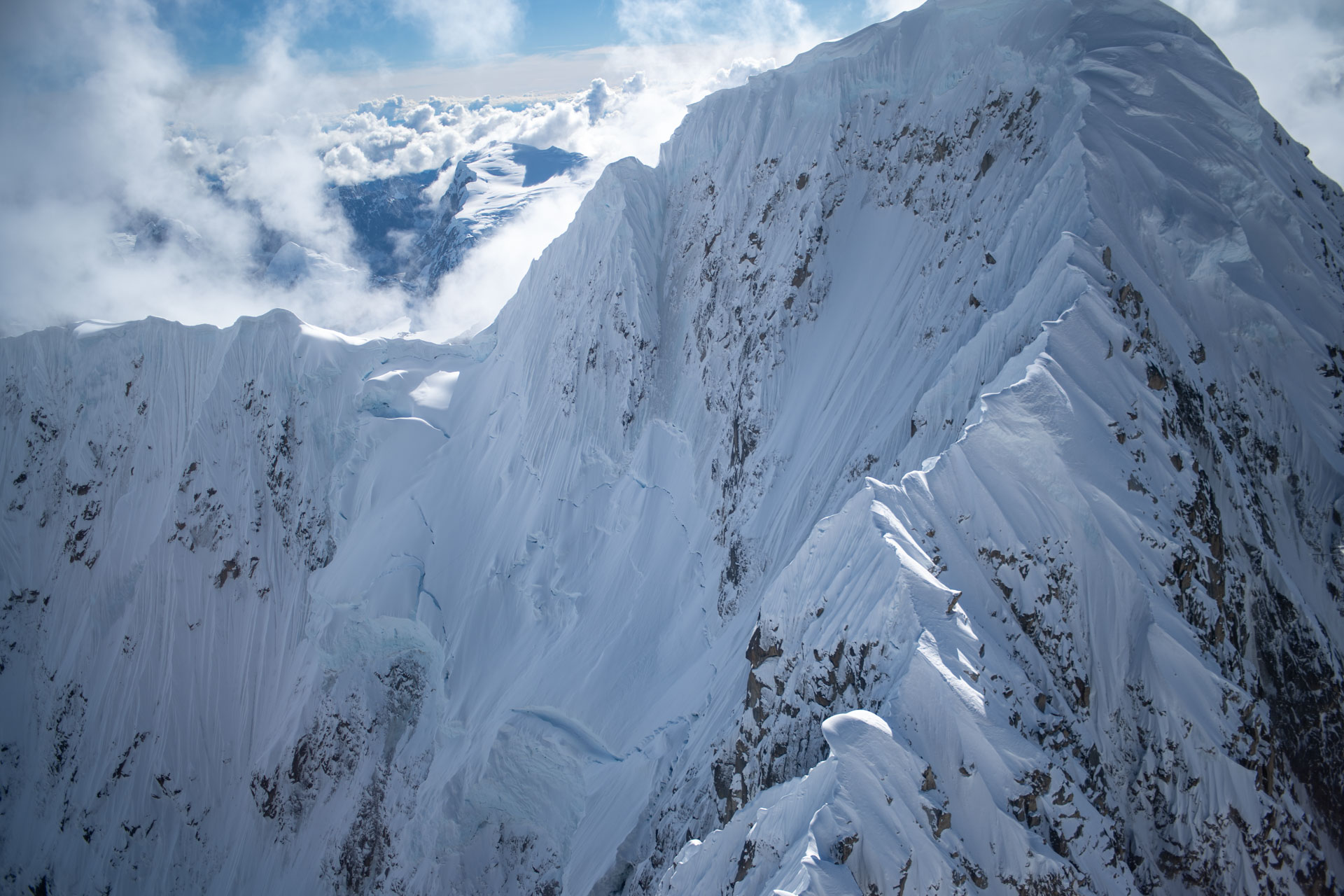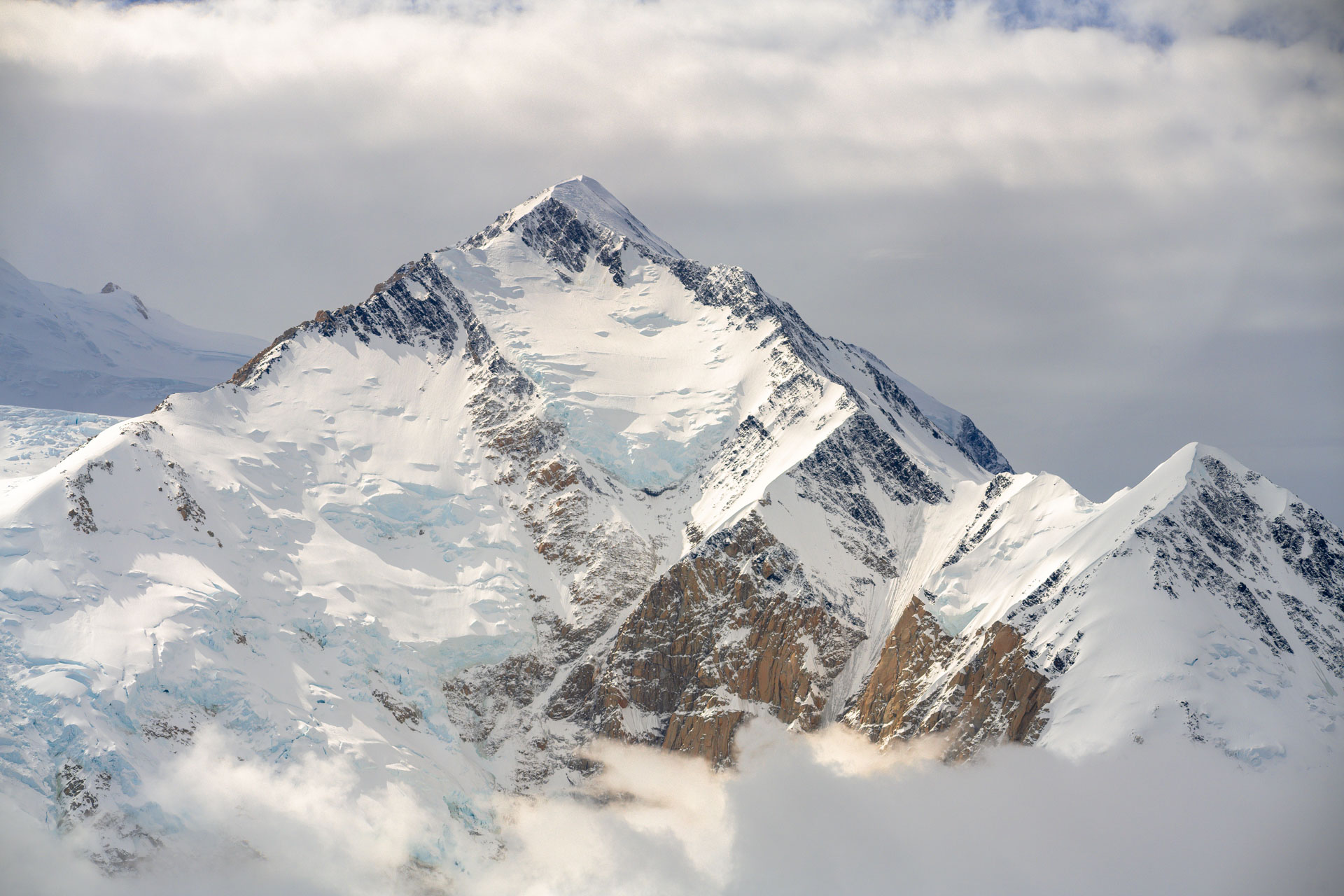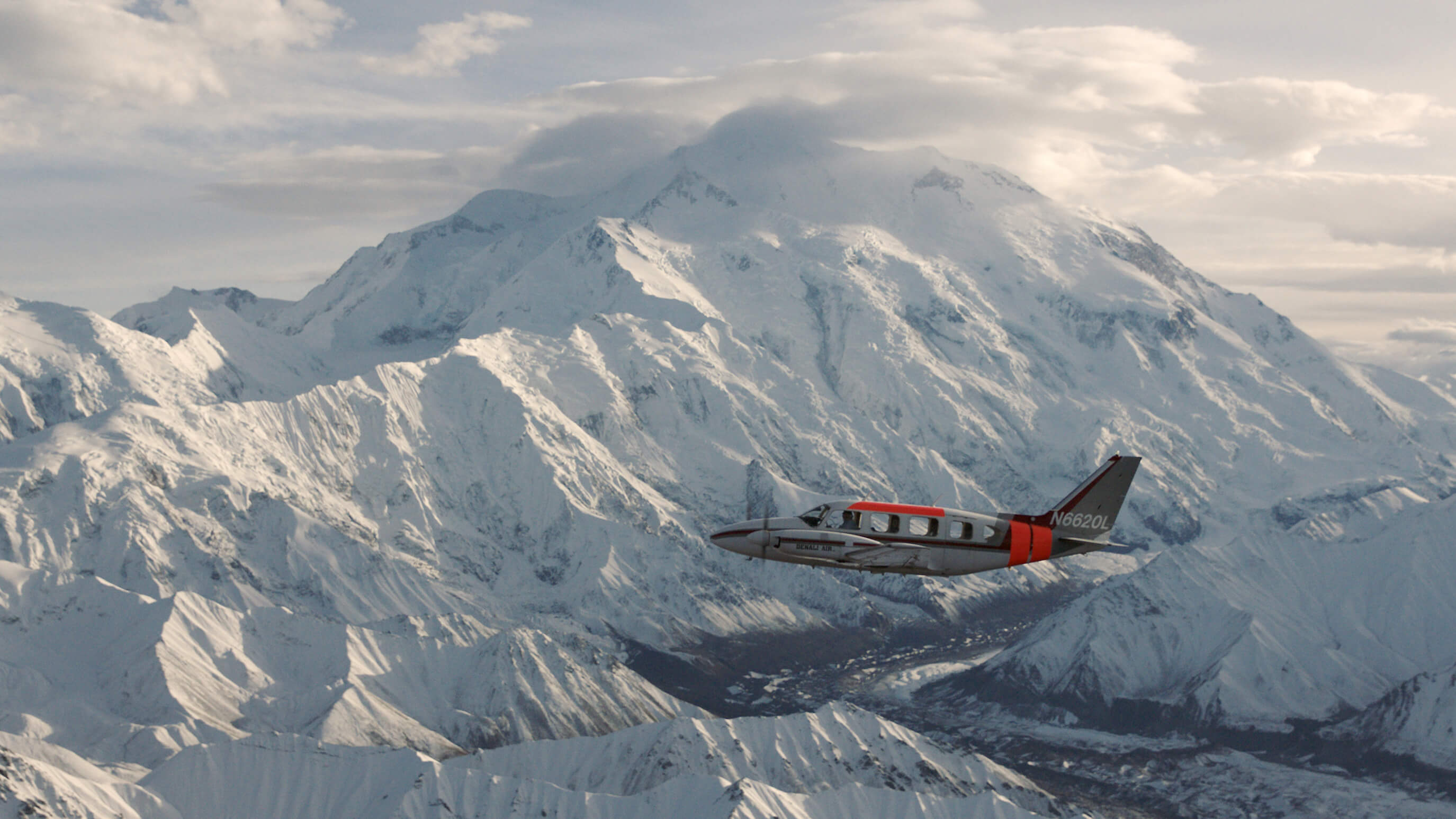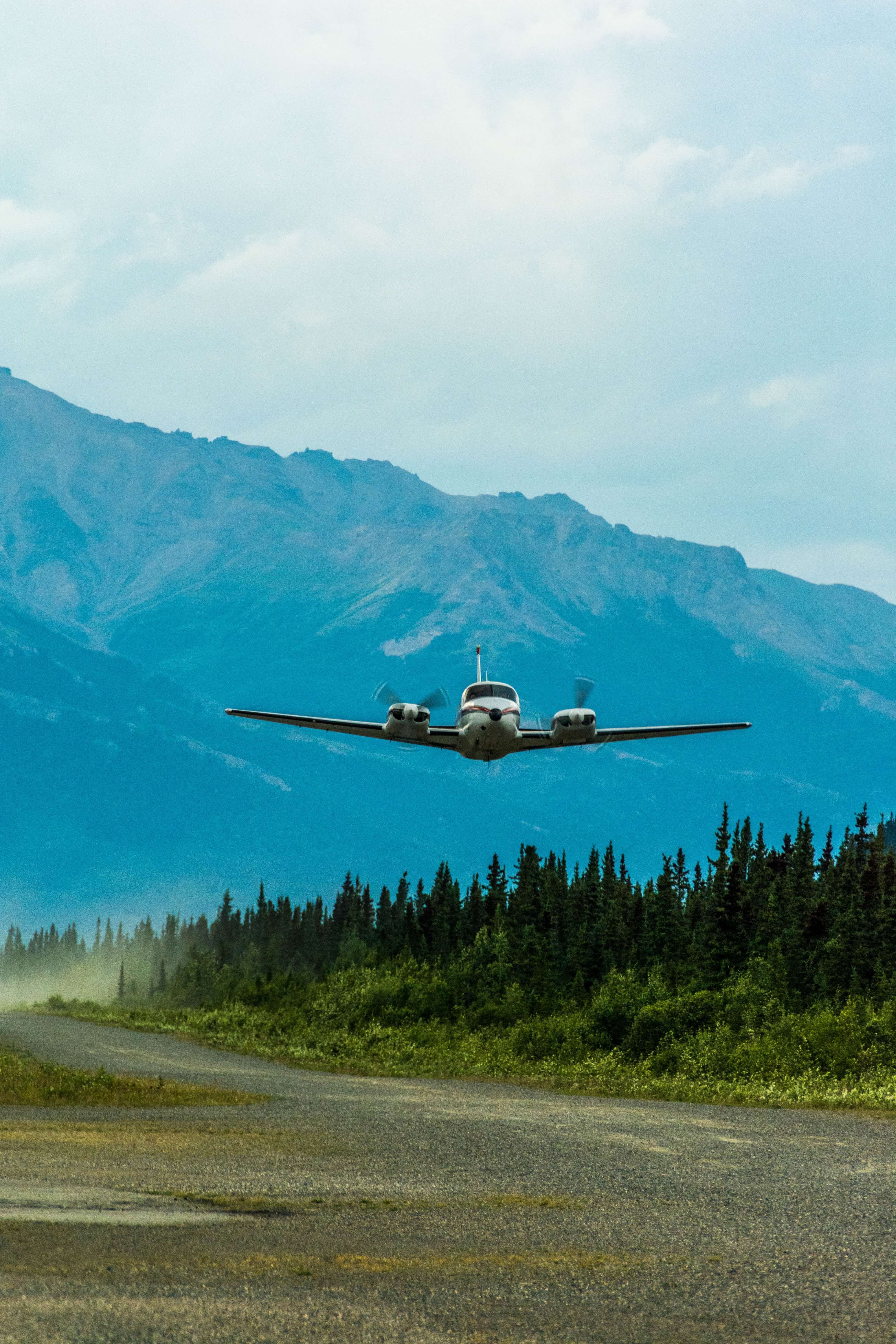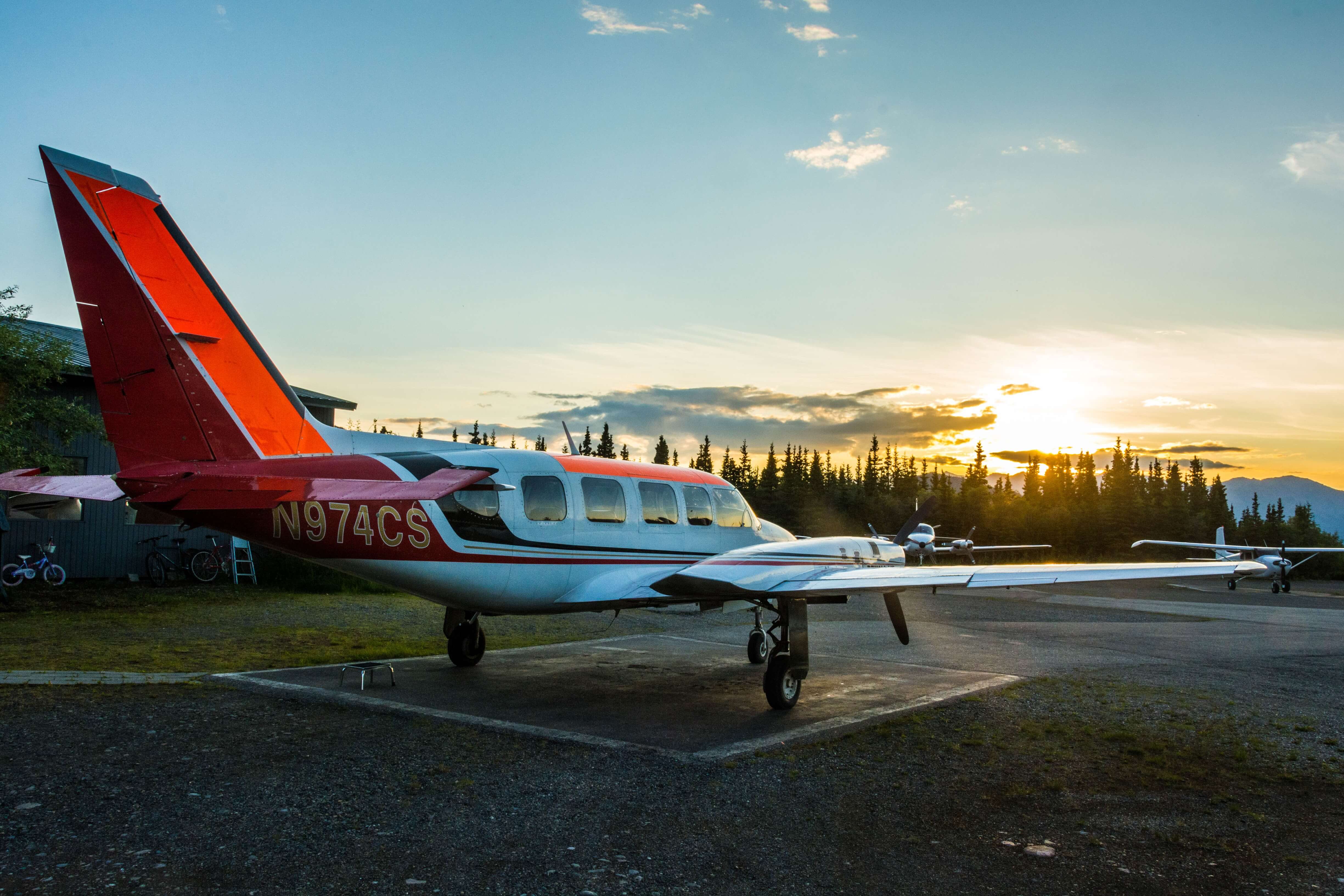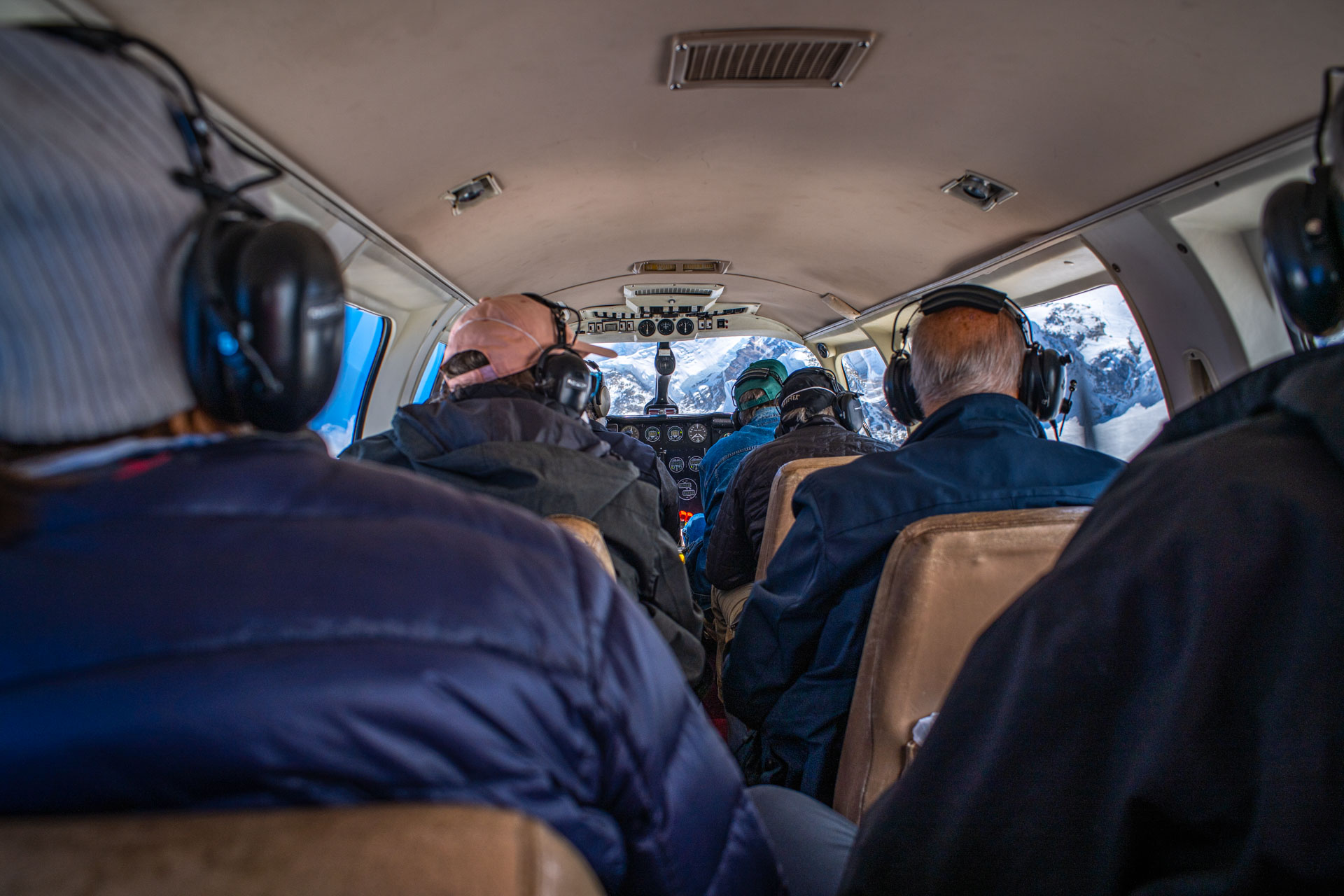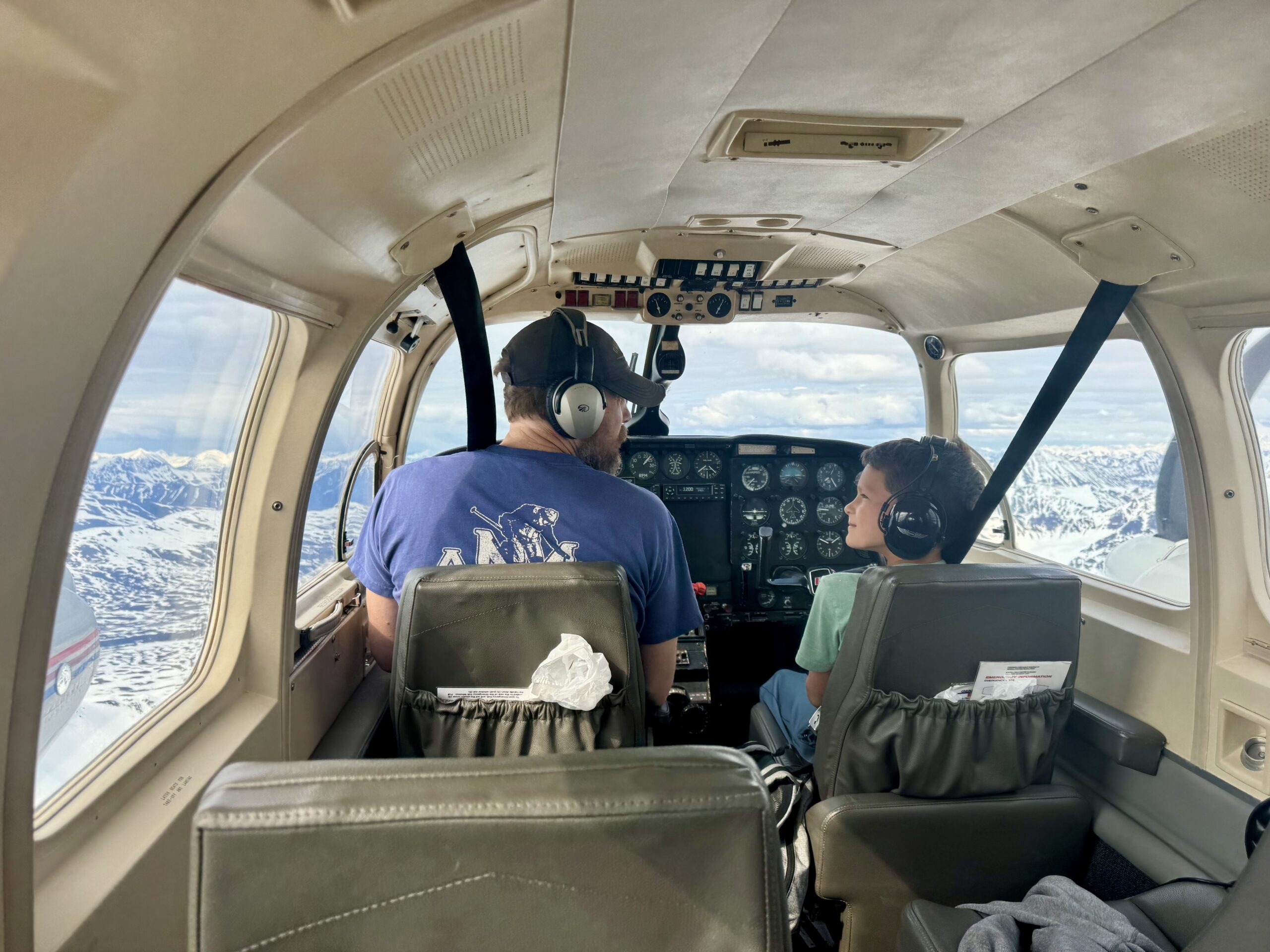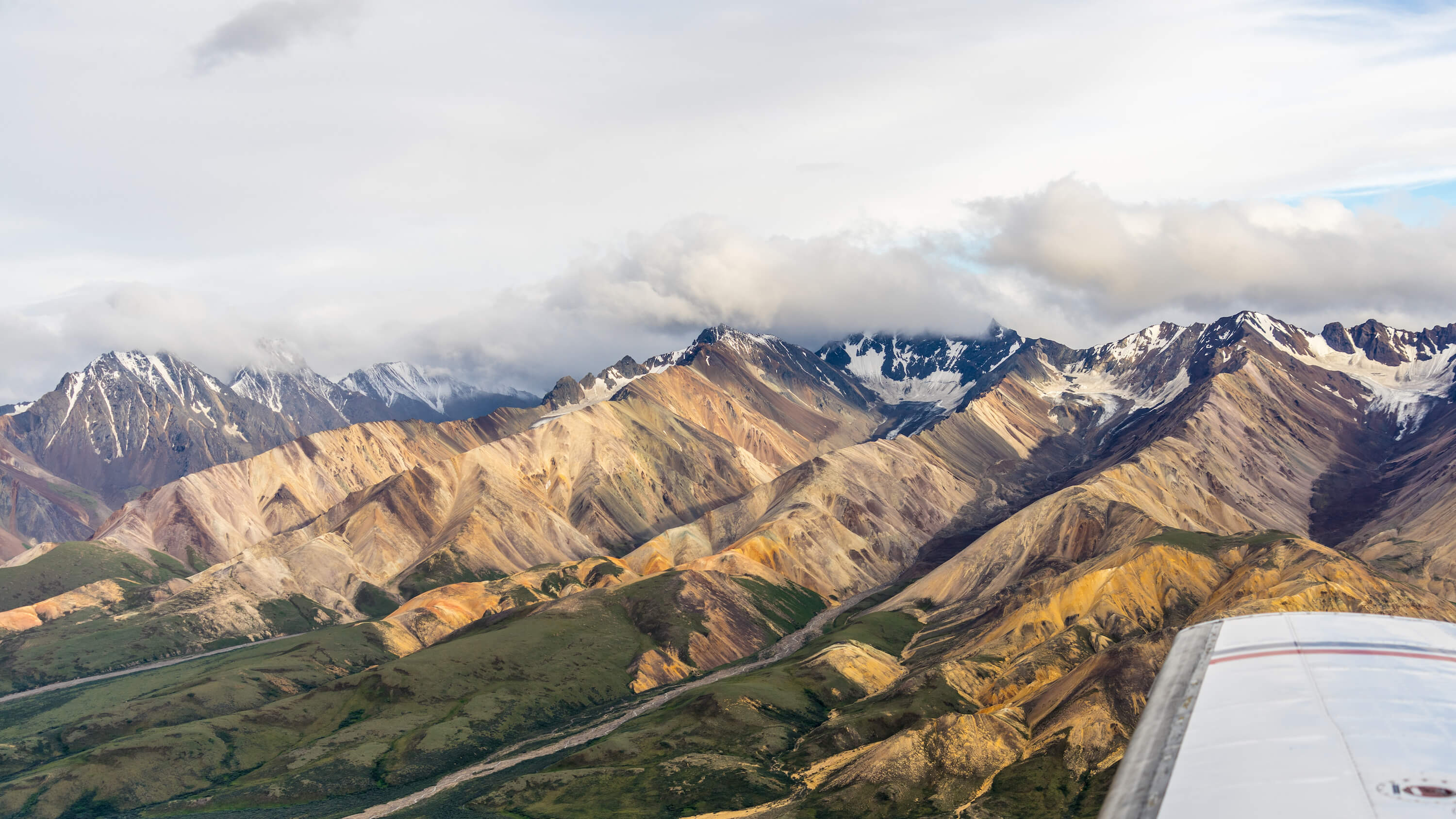
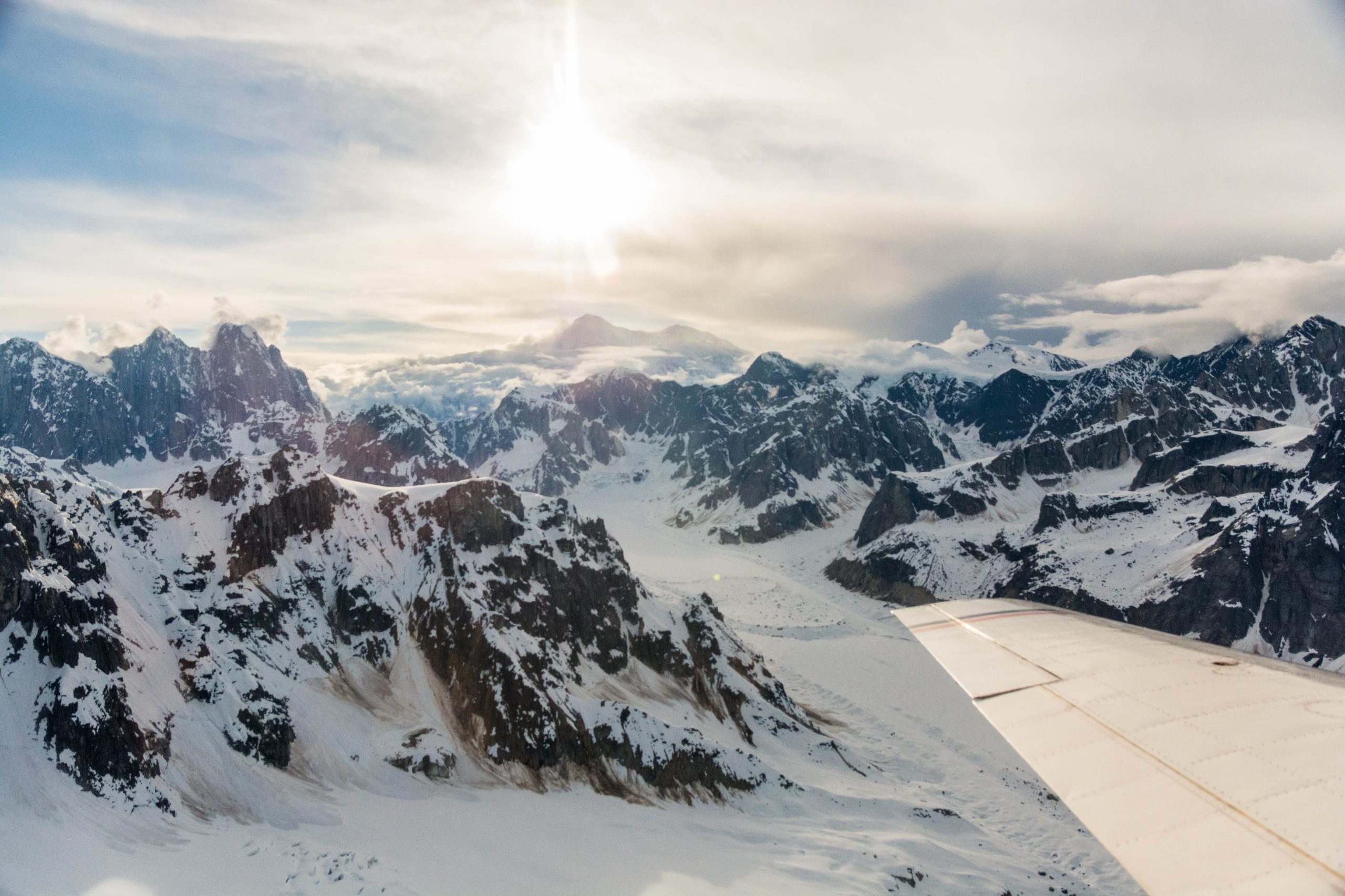
We offer the Denali Peak Experience flightseeing tour every two hours from 8AM to 8PM. If you’re an early riser and tend to start your days early, the 8AM flight can’t be beat. This is our first flight of the day and can sometimes also be our busiest. If you’ve got plans in the Park later in the day but are hoping to squeeze in all you possibly can to your Denali experience, this might be the tour for you. The early morning light (even with a midnight sun!) can be a treasure. As we’re now in the early part of July, the sun angle at the 8AM time is about 20-25 degrees above the horizon, offering a unique perspective of the many features of the Alaska Range – including the massive glaciers, the jaw-dropping Wickersham Wall, and all the nooks and crannies of the adjacent peaks. There is so much to take in!
If you’re craving a slower morning with time for a leisurely breakfast, maybe the 10AM flight would suit you better; no rush! The morning light is still nice as it continues to climb to its peak of 50 degrees above the horizon. Plus when you arrive to check in, you’ll have a chance to inquire with the returning 8AM crew who can give you some honest insider info!
Maybe you’ve already got plans in the morning and you’re after a midday adventure. We’ve got you covered on our 12PM and 2PM flights. The sun angle will be highest during these times at 50 degrees above the horizon so it will be the best opportunity for well-lit and bright views of the majestic Alaska Range. And you’ll be back with plenty of time to tack on another afternoon adventure before dinner.
If a late afternoon flight is more your style and you want to avoid the dinner crowds, we can take you up at 4PM and 6PM. By this time, the sun has begun its descent and although it doesn’t get any darker than Civil Twilight during these long summer days, the decreasing sun angle does offer some unique lighting perspectives and perhaps even some hints of alpenglow.
Our last flight time of the day is 8PM. If you’re looking to squeeze in one last adventure, this one is for you! The sun will be dipping down to about 20 degrees, casting some beautiful light on the mountains. Any aspiring photographers out there might love this time of day for the extra contrast, emerging alpenglow, and beautiful shadows cast along the surrounding peaks.
You’ve probably already thought about this by now, but there really is no bad time of day to soar above the Alaska Range on one of our flightseeing tours! These are just some of the finer details to consider when planning your itinerary. If you’ve still got questions, please feel free to reach out. We’re just a phone call away!